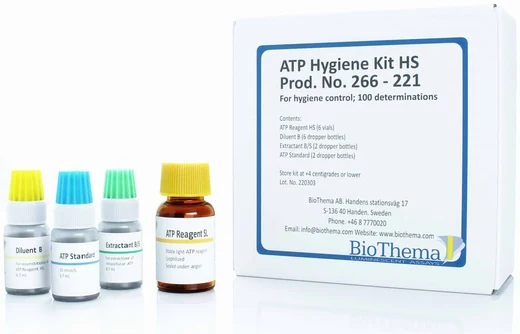
BioThema ATP Reagent Kits
ATP reagent kits using the firefly luciferase reaction, for tube and microplate luminometers.
- ATP
- reagents
- Any
- luminometer
- Tube
- & plate

Microplate readers and luminometers for ELISA, cell-based assays, microbiology and bioluminescence. We help match detection modes and plate formats to your assays.
ATP reagent kits using the firefly luciferase reaction, for tube and microplate luminometers.
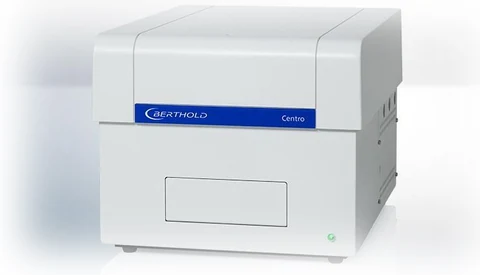
Tube and microplate luminometers and multimode plate readers for sensitive luminescence assays.
No products match these filters. Ask us: we supply more than is listed here.
Not every model is listed online. If you have a part number or specification, include it in your quote request.
A luminometer measures light produced by a reaction, such as ATP, bioluminescence or reporter genes, with very high sensitivity. A microplate reader measures absorbance, for example in ELISA. Multimode readers such as the Berthold Tristar 3 combine absorbance, fluorescence and luminescence.
Microplates suit many samples in parallel. Tube luminometers suit smaller sample numbers and reactions that need injectors. Berthold makes both formats, so the choice follows your assay and throughput.
Yes. The Centro LB 963 replaces the Centro LB 960, 961 and 962 and the Orion II LB 965. The Tristar 3 replaces the Mithras LB 940 and the TriStar LB 941 and 942. Ask us for the right model for your assay.
A luminometer plate reader, also called a microplate luminometer or luminescence microplate reader, measures the light a reaction gives off in each well of a microplate, for example in a luciferase or ATP assay. Chemiluminescence is light from a chemical reaction, so a microplate luminometer is also a chemiluminescence plate reader.
A luminometer needs no excitation light. It detects the light the reaction itself emits. For firefly luciferase that light peaks at about 560 nm, so luminometers use a sensitive detector that covers the visible range instead of a single fixed wavelength. If your assay emits at a different wavelength, tell us so we can check the detector range.
It depends on the assay. For sensitive luminescence in microplates, the Berthold Centro LB 963 is a microplate luminometer. If you also need absorbance and fluorescence, a multimode reader such as the Tristar 3 fits better. For a few tubes rather than plates, a tube luminometer is simpler. Send us the assay, plate format and detection limit and we will recommend one.
Send a product list, part numbers or a tender specification. Our technical team will recommend and quote the right solution.

